Span Zone
SaaS
UX/UI
Enterprise Systems
Translating complex operational workflows into structured, intuitive experiences that empower customers while reducing internal dependency on the licensing team.
Year
2025
Services
Product Design, UX Research, Workflow & Information Architecture
Overview
SpanZone is a self-service digital platform built from scratch to replace manual Microsoft license and cloud service provisioning.
Before Span Zone existed, Microsoft licenses and cloud services were managed and provisioned manually by company's internal licensing team. Customers relied on email communication, documentation exchanges and operational back-and-forth to activate, modify or monitor services.
This created delays, dependency bottlenecks and limited visibility for customers. The opportunity was clear: build a centralized digital platform that would enable companies to self-manage licenses and services with transparency, speed and control.
Span Zone was conceived as that platform — designed from the ground up to transform a manual, service-heavy process into an intuitive self-service experience.
Problem
The manual licensing process involved multiple stakeholders, approval loops, and operational checks. Customers lacked real-time visibility into service states, and the internal team carried the operational burden of provisioning and updates.
The challenge was not only technical, but structural:
How do you translate complex backend provisioning processes and licensing logic into workflows that business users can understand and confidently execute?
The platform needed to reduce operational friction while preserving necessary controls and safeguards.
My Role
I led the product design process from early discovery through launch, working closely with the licensing team, product stakeholders and engineering while taking ownership of:
conducting discovery workshops and workflow mapping
translating manual provisioning logic into structured digital flows
defining information architecture and system states
designing interaction patterns and multi-step workflows
prototyping and usability validation
supporting implementation and design QA
Research & Discovery
Because the platform did not previously exist, discovery began with internal expertise.
The licensing team was a key source of insight. They were actively managing licenses manually and had deep knowledge of how customers requested, modified and tracked services. Through workshops and structured conversations, we mapped the real operational flows — including edge cases, dependencies, and approval paths.
This internal knowledge was complemented by:
analysis of recurring customer requests and support tickets
workflow breakdown of provisioning scenarios
identification of time-consuming operational steps
After launch, behavior analytics tools were introduced to observe real user behavior within the platform. Heatmaps, session recordings and in-product feedback helped validate assumptions and uncover hesitation points, navigation confusion and misunderstood status indicators.
This combination of internal expertise and real usage data informed iterative improvements:
Customers needed visibility into license status and dependencies before taking action
Multi-step provisioning required clear progress indicators and state feedback
Manual logic had to be translated into structured, predictable digital flows
Reducing reliance on the licensing team required building user confidence
Clear system states were more important than visual minimalism
Process
The platform was designed around autonomy and clarity rather than internal operational structure.
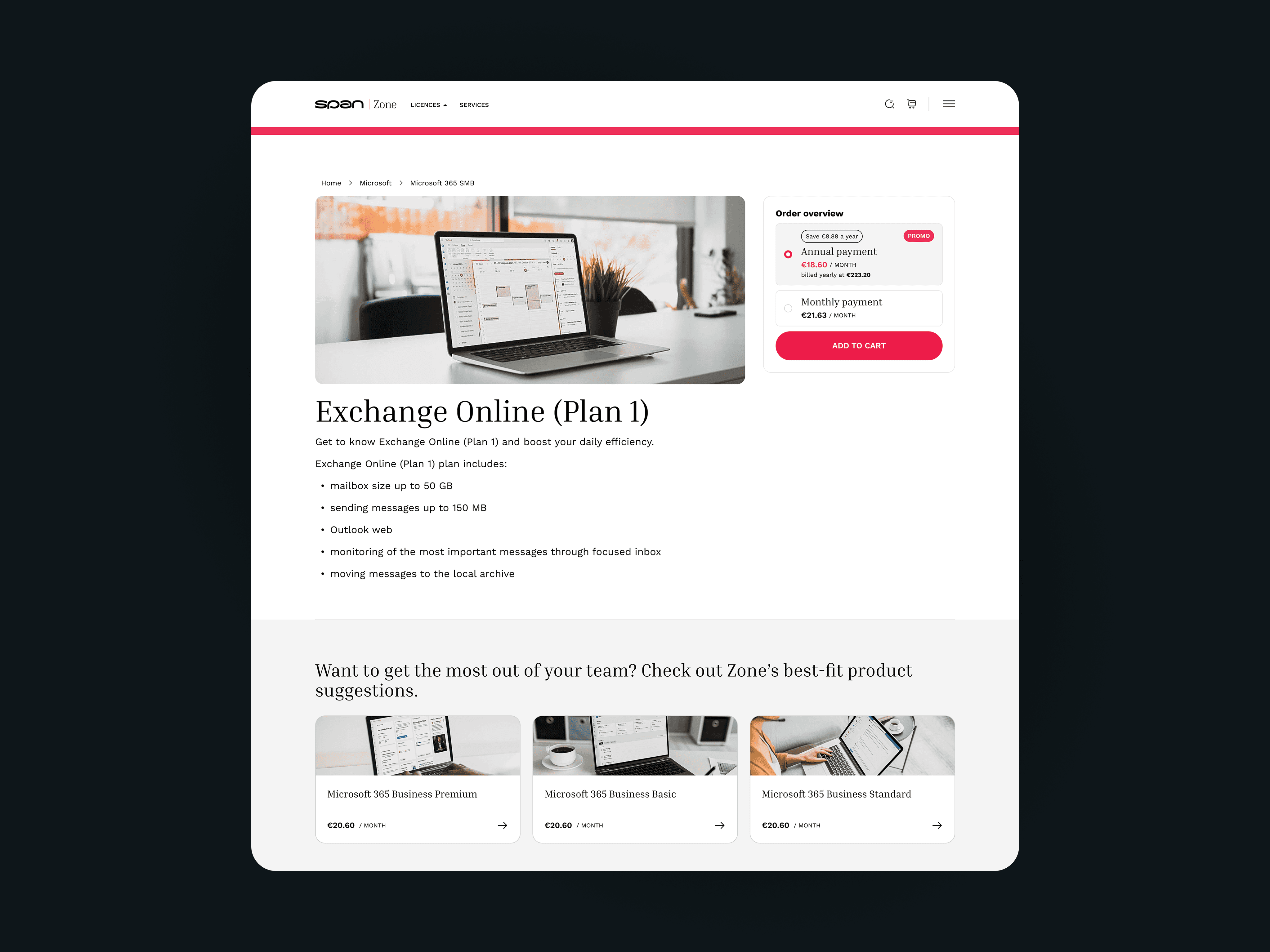
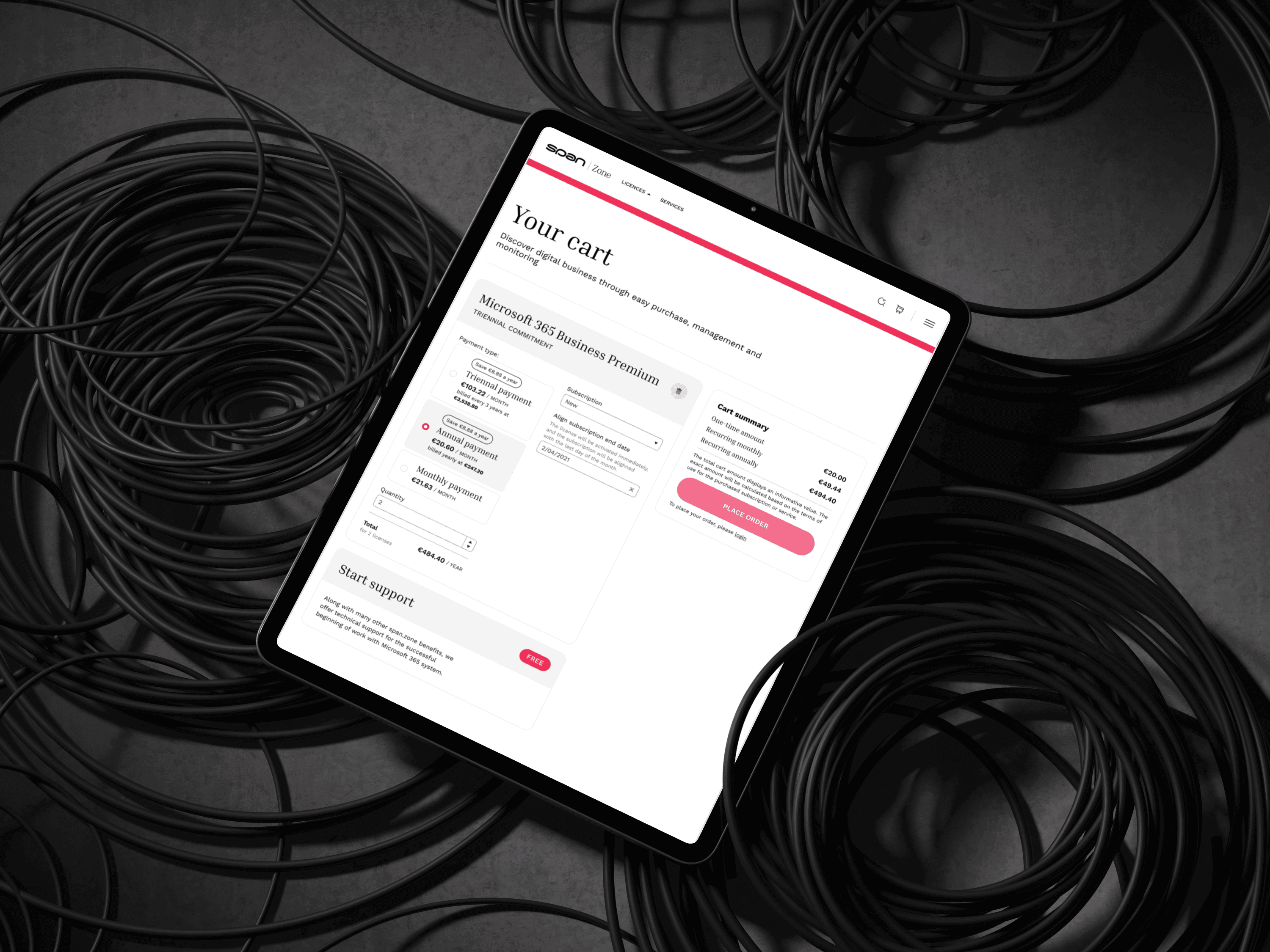
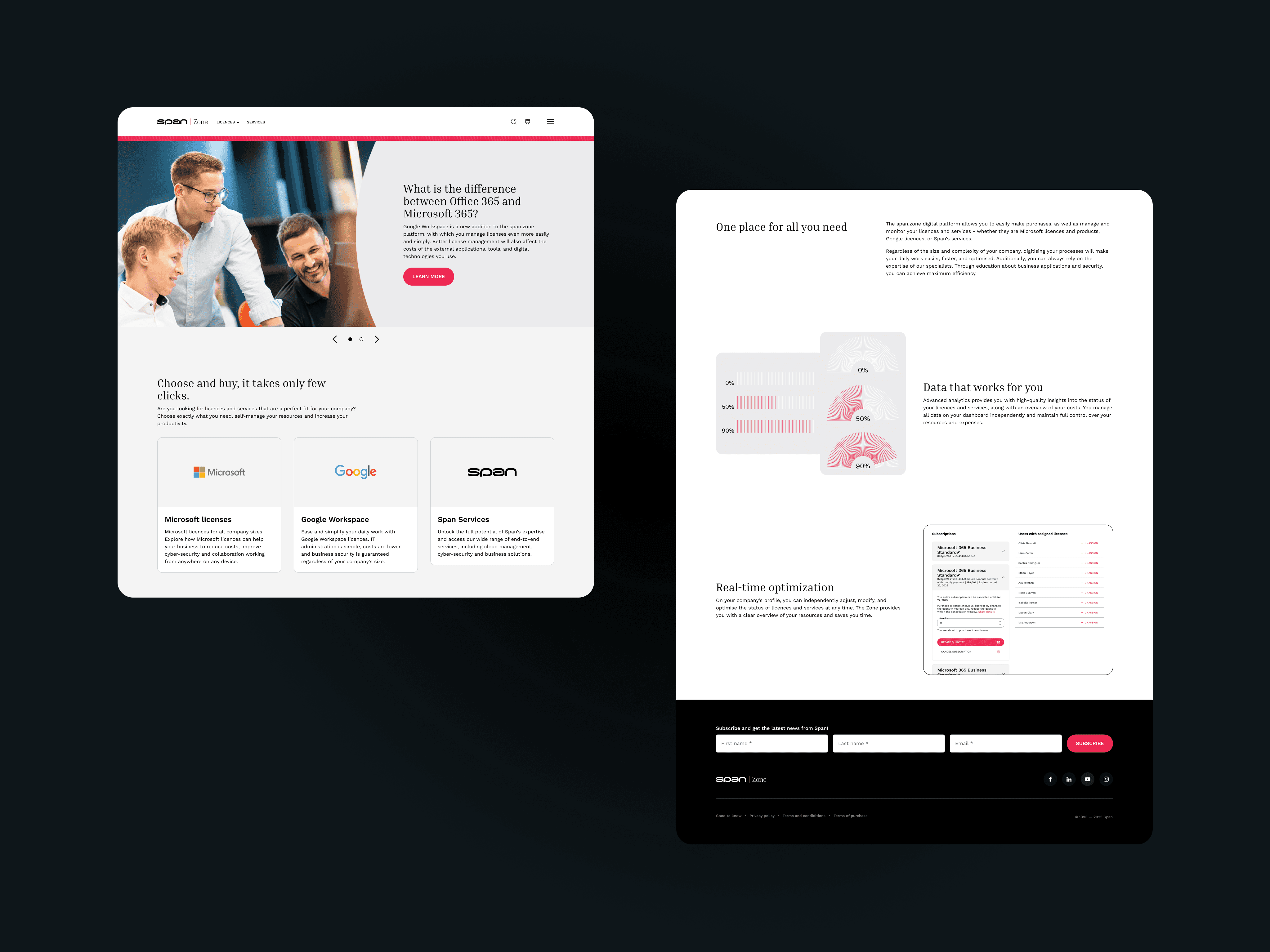
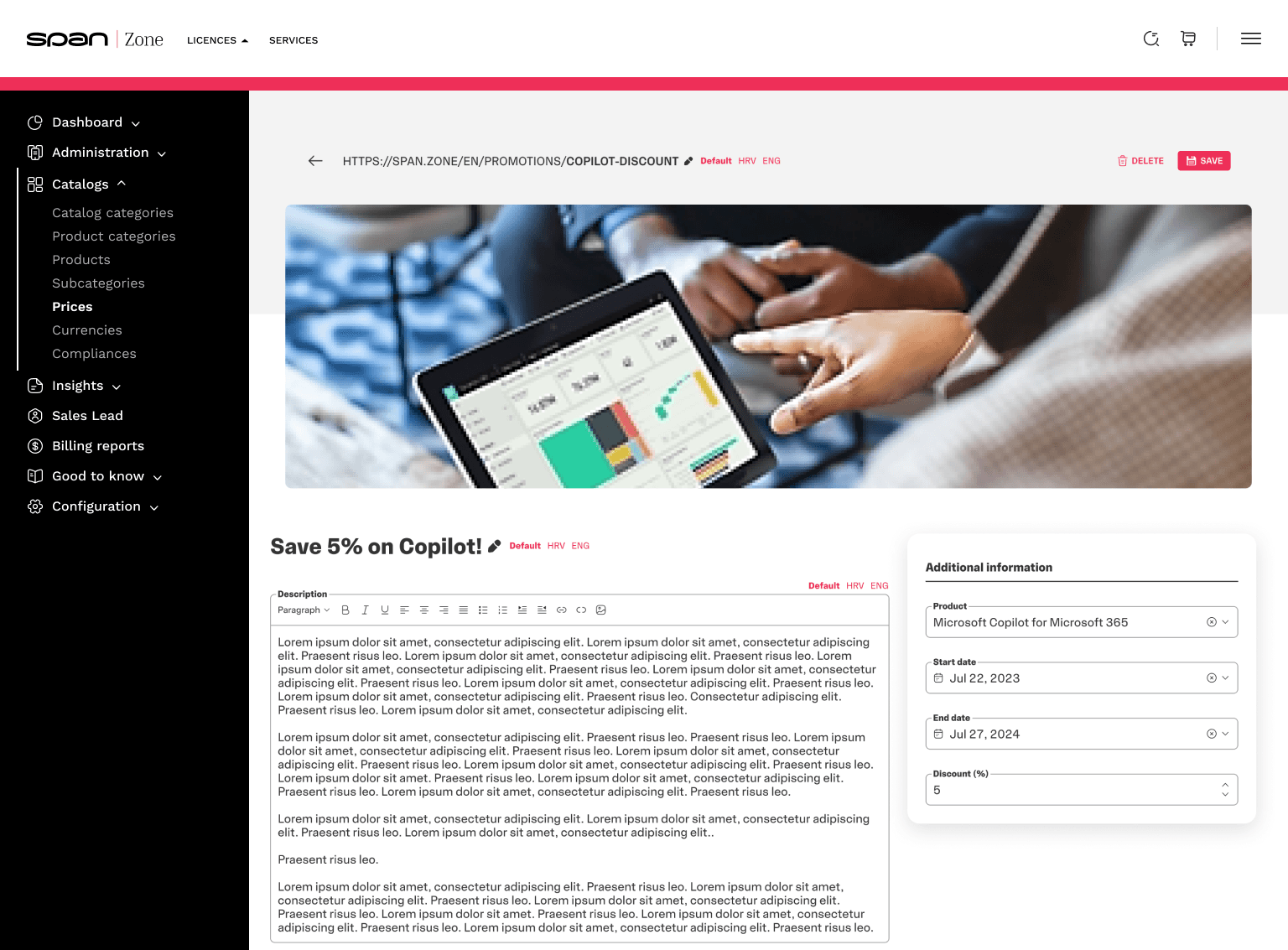
Manual service flows were transformed into guided self-service journeys with defined entry points, structured steps and confirmation safeguards. Instead of exposing backend complexity, workflows were organized around how customers think about services — active subscriptions, pending changes, expirations, and allocations.
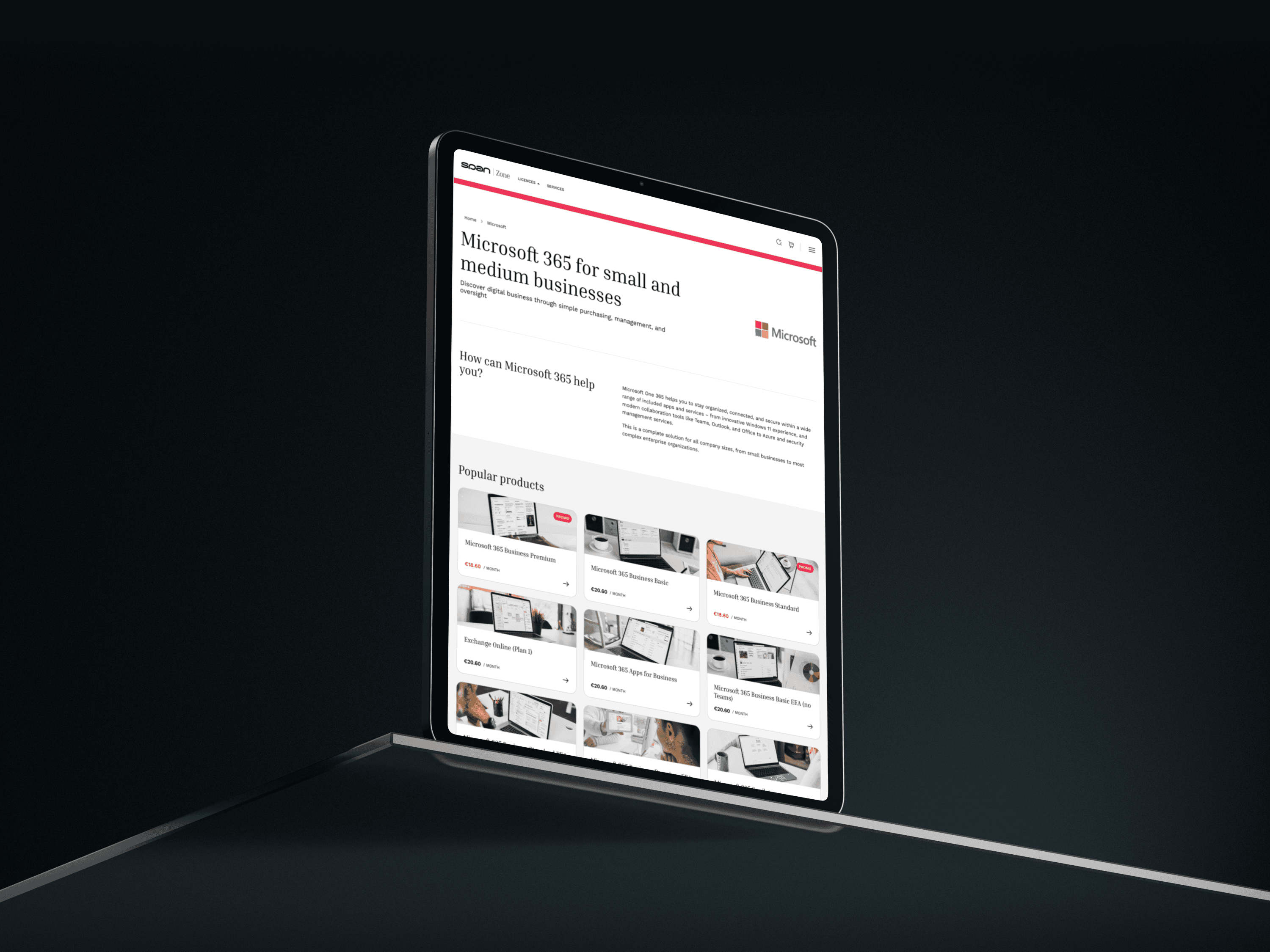
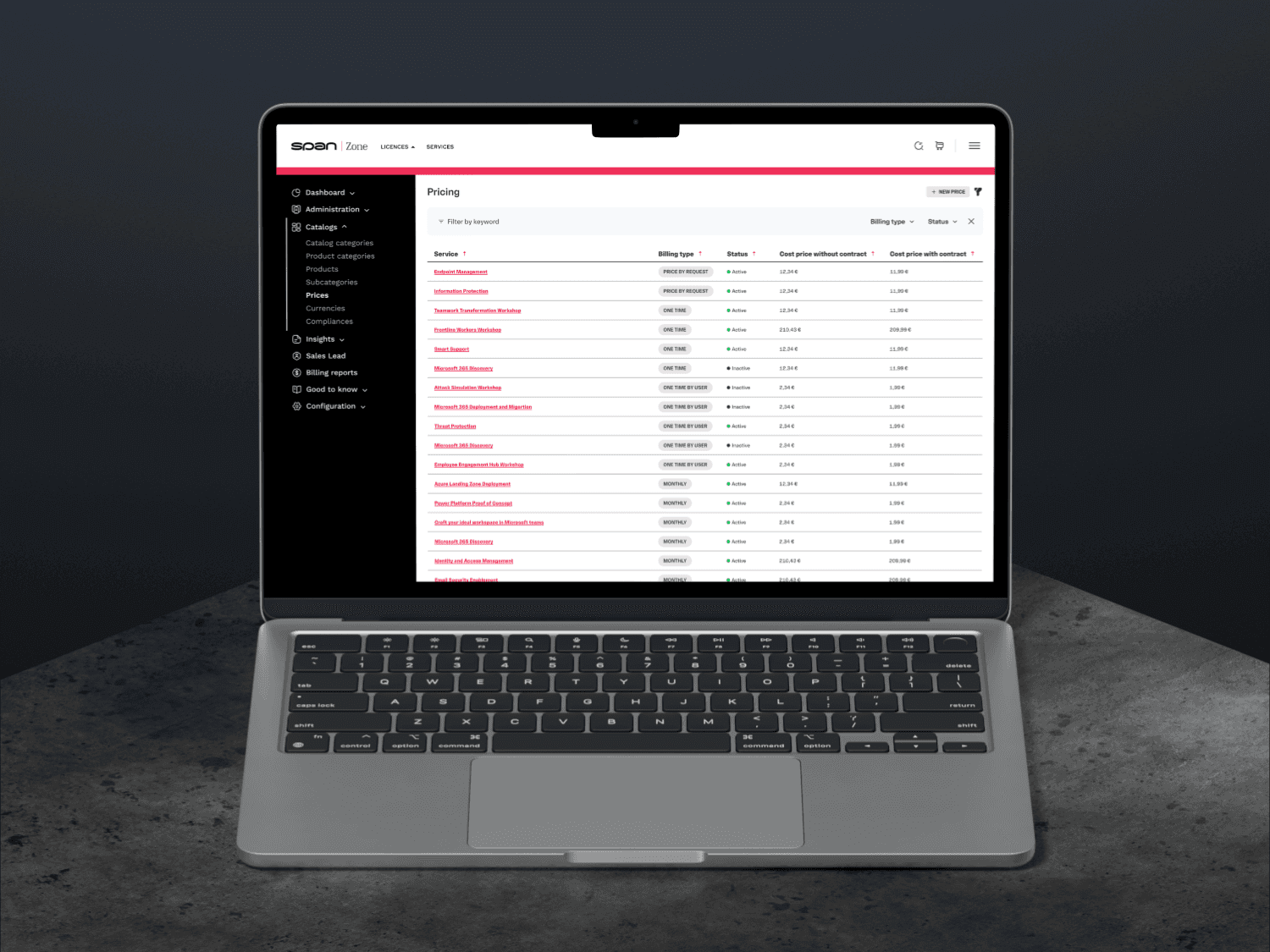
Interaction patterns were unified across Microsoft 365, Azure Plan and related services to ensure consistency when managing different resource types. State visibility was prioritized so users could quickly understand what required attention and what actions were available.
High-fidelity prototypes were validated internally and refined iteratively prior to release. The rollout was phased to ensure stability with incremental improvements introduced as the platform scaled.
The result was a cohesive system that supported expansion without increasing cognitive complexity.
Outcome
SpanZone successfully transitioned license and cloud service management from a manual, team-dependent process to a structured self-service platform. Customers gained real-time visibility into their digital resources and greater autonomy in managing services. Operational load on the licensing team was reduced and provisioning workflows became more transparent and scalable.
The platform established a digital foundation for continued automation and service growth.
Reflection
Building a platform from scratch required aligning operational reality with user mental models. Internal expertise was essential in shaping workflows, while real usage data ensured the product evolved responsibly after launch.
This project reinforced that enterprise platforms succeed when complexity is structured thoughtfully — enabling independence without sacrificing control.